

For more than fifteen years I have worked where regenerative design, digital construction and life cycle sustainability assessment meet. Digitalisation in construction has mostly been used to build faster, not necessarily better. I think it should also improve social and ecological quality, because how we produce and use the built environment sits at the centre of the Polcycrisis - and can be part of the systemic solutions for solving it.
Works on
News & events
-
Urban Heat at COP31: context-specific pathways for EU buildings, 12 November
Martin presents the context-specific emissions pathways work in a shared 60-minute session on cooling and clean air, alongside submissions from Ecuador, India, Ethiopia and China.
-
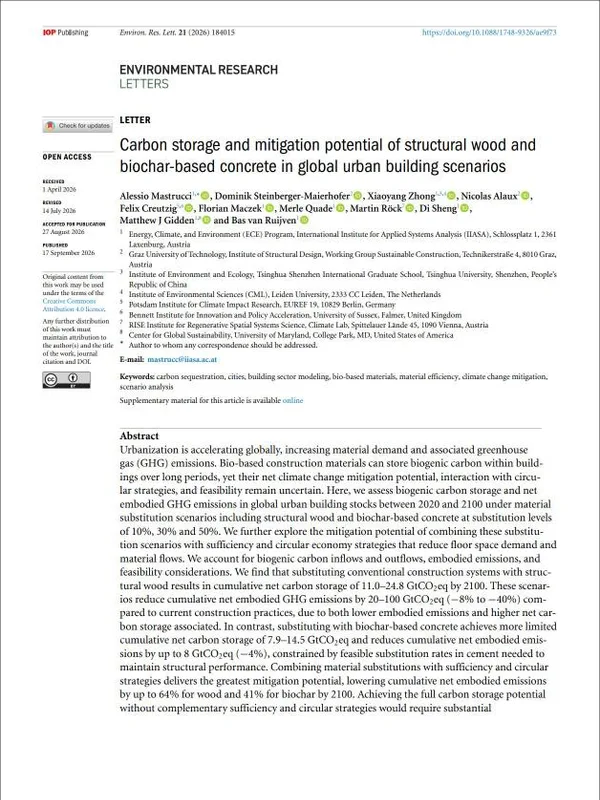
How much carbon wood and biochar could store, in Environmental Research Letters
New work led by IIASA on what bio-based construction could hold to 2100, and why sufficiency and circularity decide whether the material switch is feasible at all.
-
Two whole life carbon sessions at COP31, 16 November
Better data in the morning, what to do with it in the afternoon: two COP31 sessions on the gap between measuring carbon and managing it, the second presenting CLEAR.
-
Whole Life Carbon Network and INDICATE LIFE closing event, 21 October in Brussels
A day of roundtables and discussion on turning whole life carbon data into benchmarks, policy and investment decisions - and on what INDICATE LIFE leaves behind.
-
Leadership Panel at IGBC Green Building Congress 2026, Mumbai
Martin Röck joins the opening Leadership Panel on global pathways to green, resilient and net-zero built environments, 26 November in Mumbai.
-
CLEAR: a coalition to make whole life carbon numbers mean the same thing
RICS and founding members including GBDI have launched the Coalition for Life cycle Emissions Alignment and Reporting, to quantify where carbon assessment methods diverge and then harmonise them.
-
GBDI non-profit association founded
The Global Building Data Initiative has been established as a non-profit association under Austrian law, with RISE in a founding role.
-
Green procurement of low-carbon concrete - what came out of the Beijing seminar
Sixty participants from government, industry and research on how public procurement can pull low-carbon building materials into the market, and what China plans to put into procurement evaluation next.
-
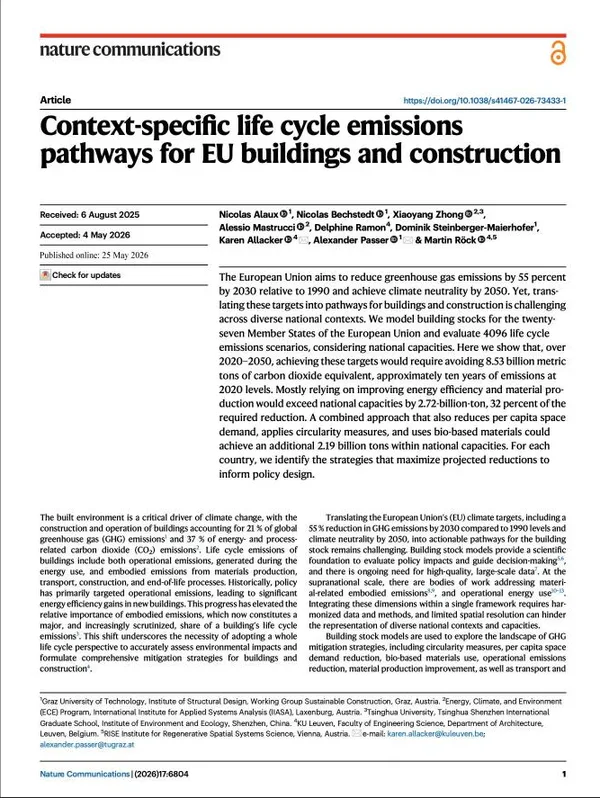
Context-specific emissions pathways for EU buildings, in Nature Communications
New work with KU Leuven, TU Graz and IIASA on what different decarbonisation pathways mean for the European building stock to 2050.
-
Whole life carbon for India's building sector - GBDI webinar with IIT Bombay
Why whole life carbon matters for India's net-zero goals, what CCTS and CBAM mean for material supply chains, and which data and tools exist today.
-
Keynote at the CBPM Conference, Cape Town
On whole life cycle modelling for low-carbon, climate-resilient building stock - and on why there is no one pathway that fits every context.
-
A global buildings database, openly published
Whole life carbon, energy performance and material intensity for buildings worldwide - the dataset behind GBDI, released on Zenodo.
Projects
-
Embodied Carbon in the German Building Sector - Creating Lead Markets for Climate-Friendly Materials
Quantified Germany's embodied carbon from construction and set out how limit values could turn the building sector into a lead market for near-zero steel and cement.
-
Analysis of Life Cycle Greenhouse Gas Emissions and Removals of EU Buildings and Construction
Quantified the baseline and the plausible futures for emissions and removals across the EU building stock to 2050.
-
Chile: whole life carbon tool and data harmonisation with OpenBDF
Aligns Chile's national whole life carbon tool and building database with the open global data format from the start, so the data stays comparable.
-
CollaborativeCarbon - Whole Life Carbon Assessments for Collaborative Housing across Europe
The first quantitative baseline for the whole life carbon of European collaborative housing - and the finding that it is structural material, not the collaborative model, that decides performance.
-
GBDI China and India Cooperation Incubator
Extends the global building data work into the two markets that will add the most floor area this century.
-
GBDI Global Building Data Initiative (Pilot)
Launched an open global data commons on resource use and upfront embodied carbon of new buildings.
-
Global Status Report for Buildings and Construction
The annual global stocktake of the sector's emissions and progress.
-
Global Whole Life Carbon Tracker for the Built Environment
Builds a global tracker of whole life carbon in construction, so progress can be measured against something.
-
IEA EBC Annex 72 - Assessing Life Cycle Related Environmental Impacts of Buildings
Harmonised building LCA methods, workflows and tools across 27 countries.
-
INDICATE LIFE - National Building LCA Data and Policy Accelerator
Helps national consortia generate the building LCA data their governments need to set whole life carbon benchmarks and targets.
-
INDICATE National Building LCA Data Accelerator (Pilot)
Piloted the data accelerator in three countries, and showed the approach transfers.
-
PEF4Buildings: applying the Product Environmental Footprint method to office buildings
Tested whether the EU's Product Environmental Footprint method works on whole buildings, and set out how benchmarks and performance classes for offices could be defined.
-
Re:Living - Scaling Renovation: Impact Hierarchy
Set out a hierarchy for action on Europe's housing - renovate first, extend second, build new last - and quantified what following it would save.
-
Supporting the Development of a Roadmap for the Reduction of Whole Life Carbon of Buildings
Provided the archetype modelling behind the EU's roadmap for bringing down whole life carbon.
-
Towards Embodied Carbon Benchmarks for the European Building Industry
Established a first European baseline for embodied carbon from real building data, and a budget-based way to set targets against it.
Publications
- Context-specific life cycle emissions pathways for EU buildings and construction
- The Global Building Data Initiative (GBDI): Open Data Methods and Tools for Whole Life Carbon Decarbonization
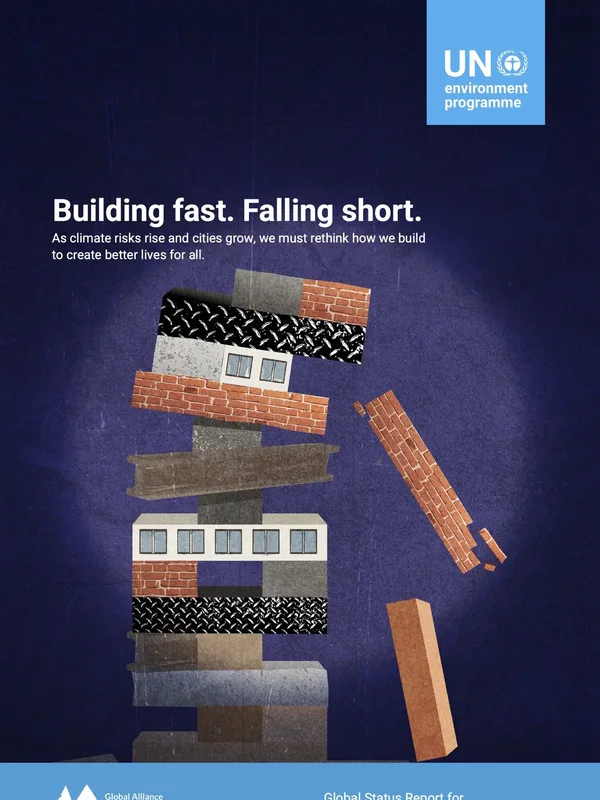
- Global Status Report for Buildings and Construction 2025–2026: As climate risks rise and cities grow, we must rethink how we build to create better lives for all
- Carbon storage and mitigation potential of structural wood and biochar-based concrete in global urban building scenarios
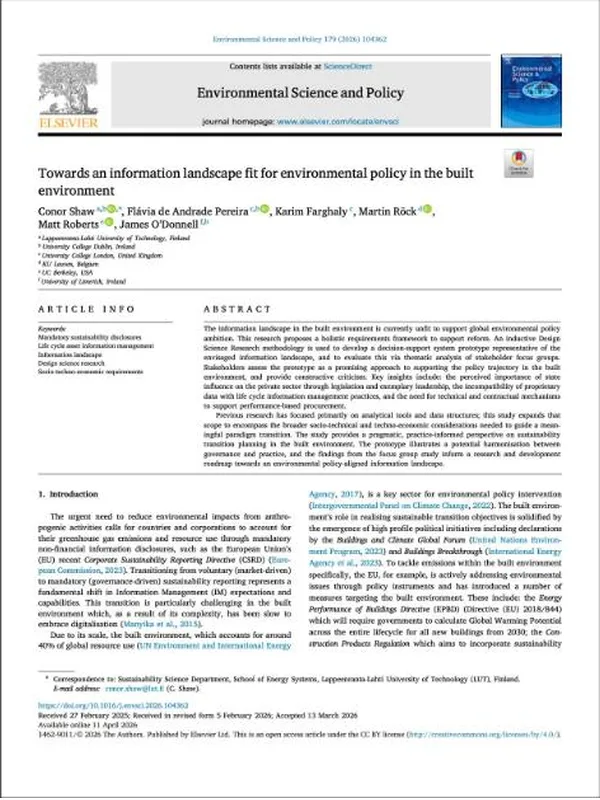
- Towards an information landscape fit for environmental policy in the built environment
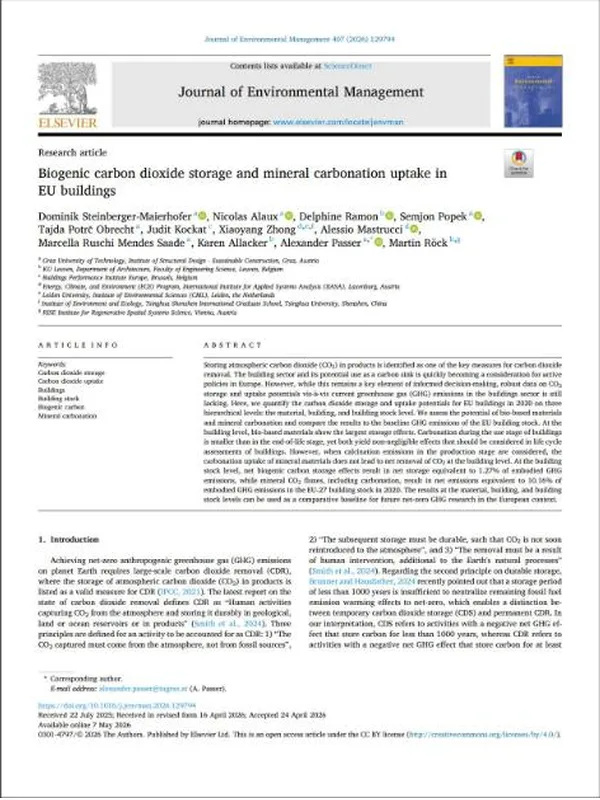
- Biogenic carbon dioxide storage and mineral carbonation uptake in EU buildings
- The housing we need for the future we want
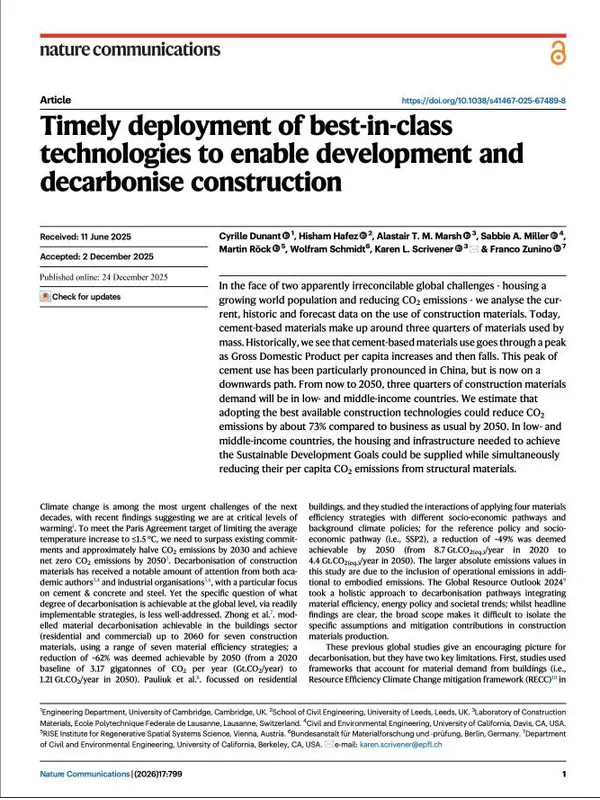
- Timely deployment of best-in-class technologies to enable development and decarbonise construction
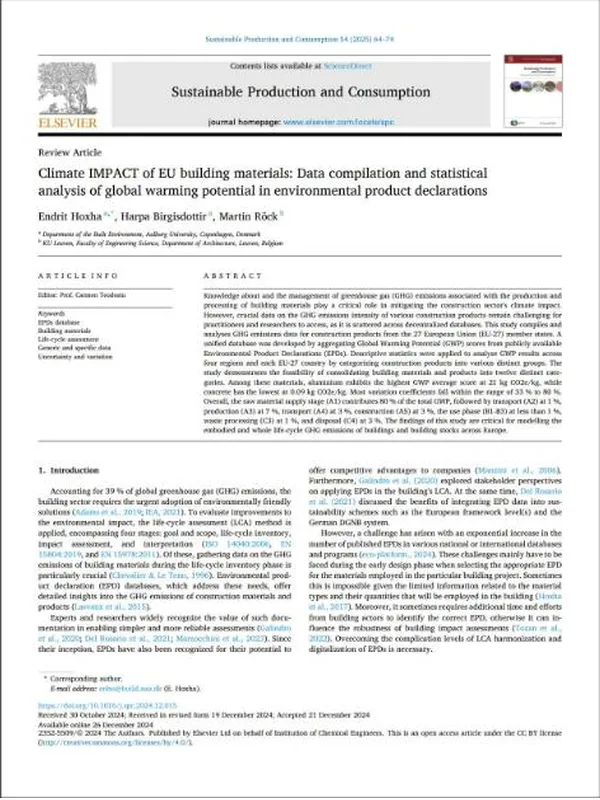
- Climate impact of EU building materials: data compilation and statistical analysis of global warming potential in environmental product declarations
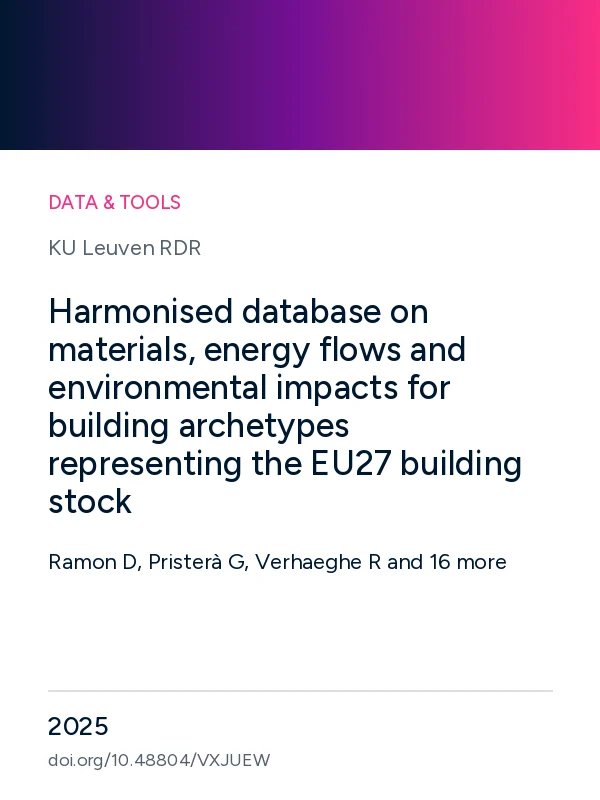
- Harmonised database on materials, energy flows and environmental impacts for building archetypes representing the EU27 building stock
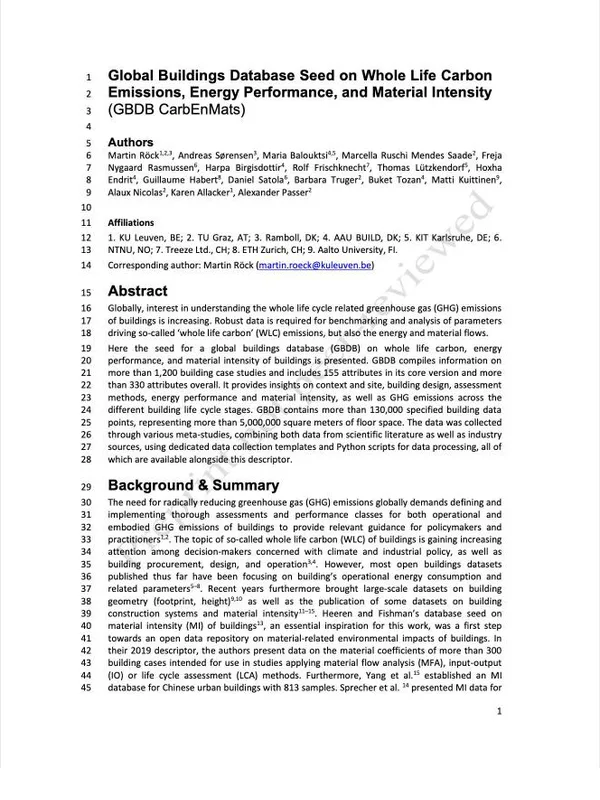
- A global buildings database: whole life cycle GHG emissions, energy performance, and material intensity
- wlc-scenario-explorer: an open source tool for exploring building stock whole life cycle emission scenarios
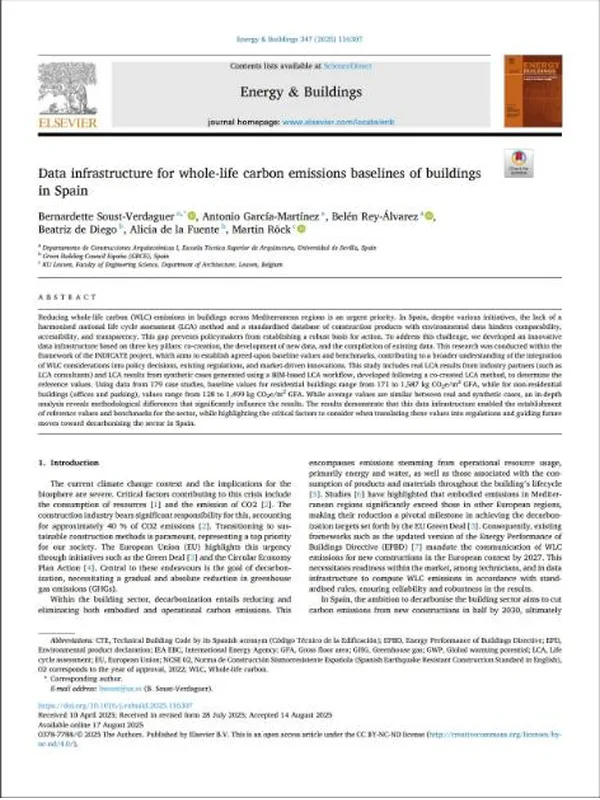
- Data infrastructure for whole-life carbon emissions baselines of buildings in Spain
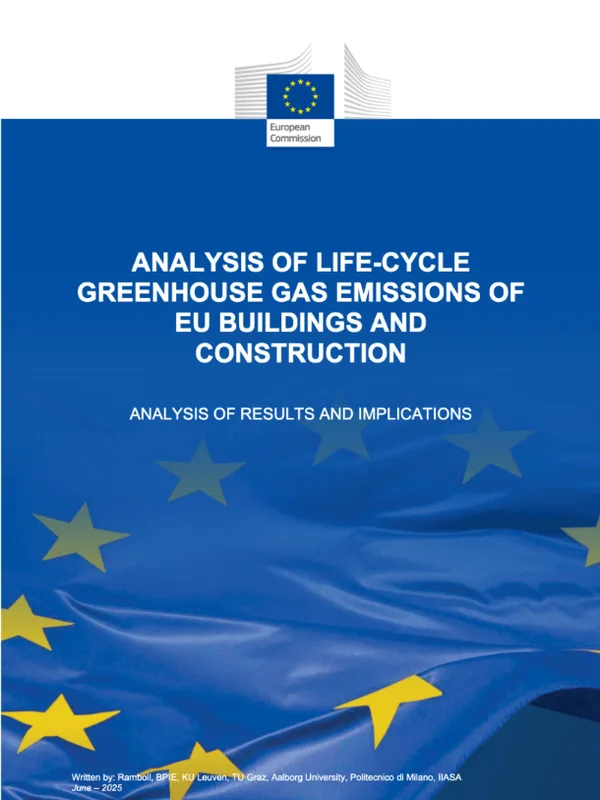
- Analysis of life-cycle greenhouse gas emissions of EU buildings and construction - analysis of results and implications
- Whole-life greenhouse gas emission reduction and removal strategies for buildings
- Reduktion und Regulierung von Embodied-Carbon-Emissionen im deutschen Gebäudesektor
- Supporting the development of a roadmap for the reduction of whole life carbon of buildings - final technical report
- SLiCE: an open building data model for scalable high-definition life cycle engineering, environmental hotspot analysis and dynamic impact assessment
- How to establish whole life carbon benchmarks - insights and lessons learned from emerging approaches in Ireland, Czechia and Spain
- IEA EBC Annex 72 - Assessing life cycle related environmental impacts caused by buildings: background reports
- Carbon footprint assessment of a wood multi-residential building considering biogenic carbon
- Embodied carbon emissions of buildings and how to tame them
- SLiCE hotspot analysis tool
- Using systematic building decomposition for implementing LCA: the results of a comparative analysis as part of IEA EBC Annex 72
- Critical life cycle assessment of the innovative passive nZEB building concept 'be 2226' in view of net-zero carbon targets
- Bio-based building material solutions for environmental benefits over conventional construction products – Life cycle assessment of regenerative design strategies (1/2)
- Low-tech passive solar design concepts and bio-based material solutions for reducing life cycle GHG emissions of buildings – Life cycle assessment of regenerative design strategies (2/2)
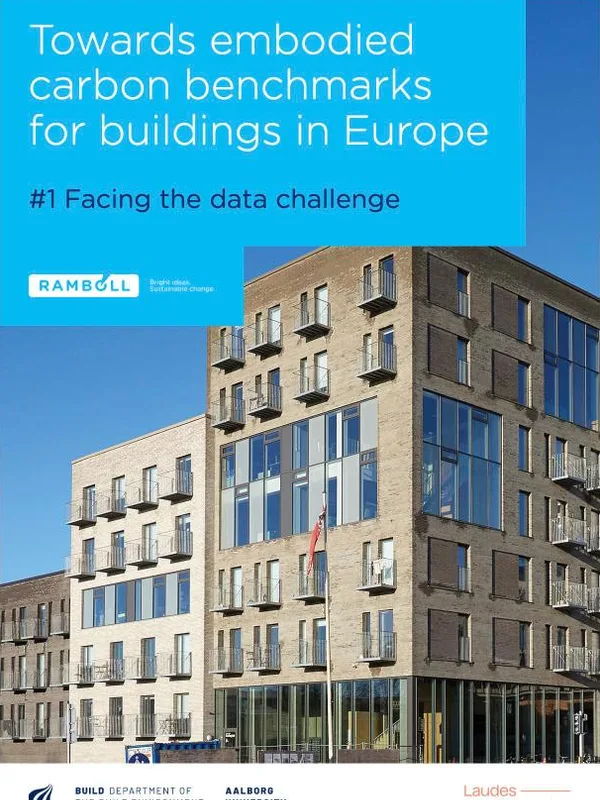
- Towards embodied carbon benchmarks for buildings in Europe (four-part series)
- Embodied carbon of European buildings database (EU-ECB-DB)
- Environmental potential of earth-based building materials: key facts and issues from a life cycle assessment perspective
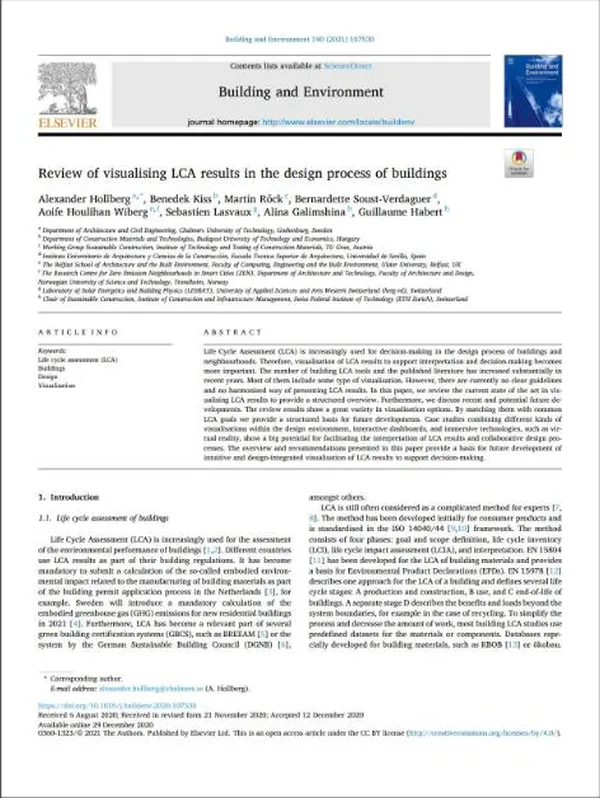
- Review of visualising LCA results in the design process of buildings
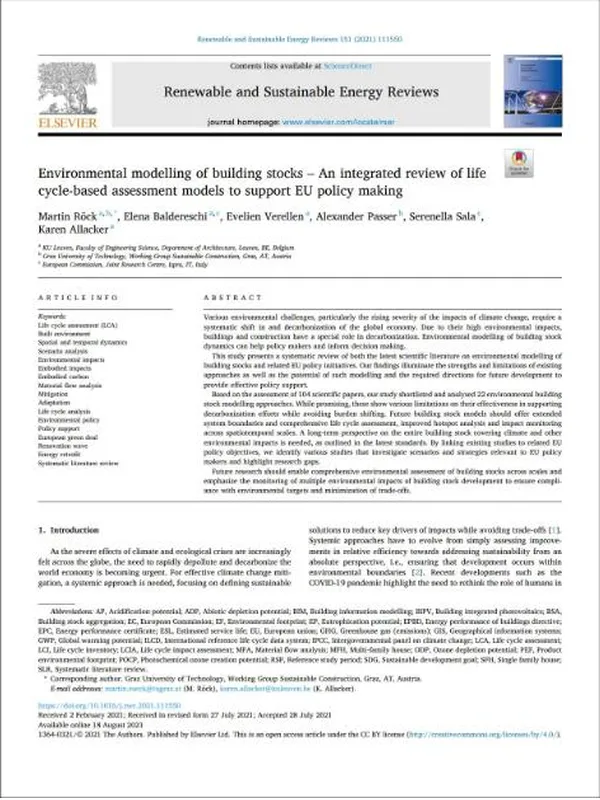
- Environmental modelling of building stocks - an integrated review of life cycle-based assessment models to support EU policy making
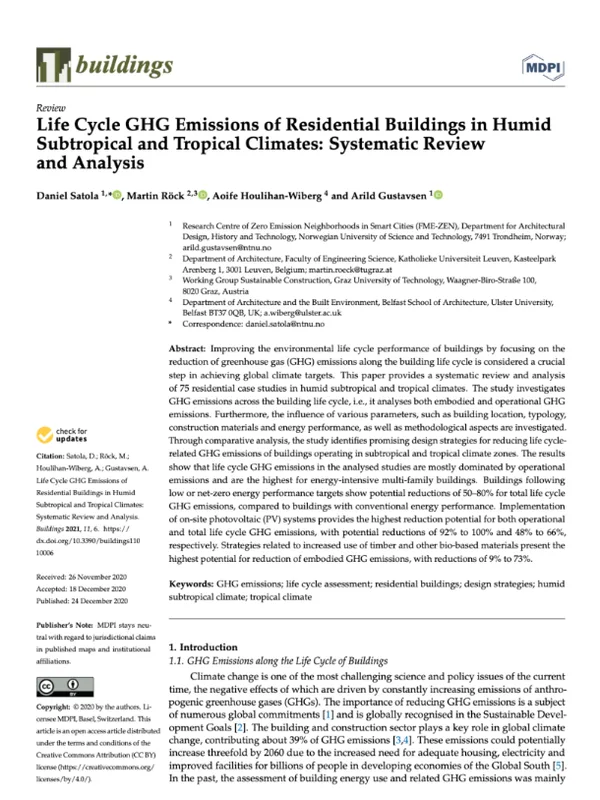
- Life cycle GHG emissions of residential buildings in humid subtropical and tropical climates: systematic review and analysis
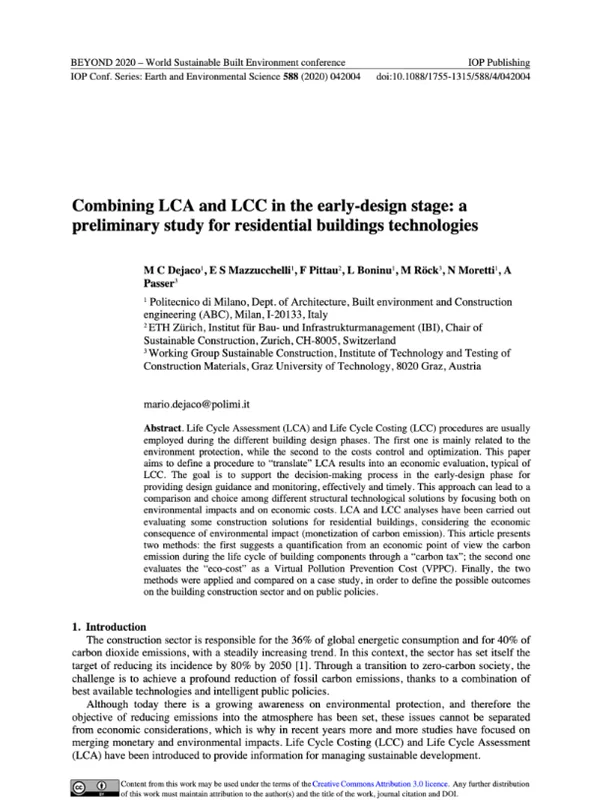
- Combining LCA and LCC in the early-design stage: a preliminary study for residential buildings technologies
- Carbon budgets for buildings: harmonizing temporal, spatial and sectoral dimensions
- BIM and LCA integration: a systematic literature review
- Embodied GHG emissions of buildings - the hidden challenge for effective climate change mitigation
- Environmental benchmarks for buildings: needs, challenges and solutions
- wohnlabor - gemeinsam wohnen gestalten
- Strategies to improve the energy performance of buildings: a review of their life cycle impact
- LCA and BIM: visualization of environmental potentials in building construction at early design stages