
Expertise

What we do, grouped by the three strands of our approach. Under each field are the projects and publications where you can check it.

Scaling up: changing the rules

Evidence for the people writing the rules, and the methods that make it hold up.

More on this strand →

Photo: Troy Mortier / Unsplash

How much is too much?

Whole life carbon assessment and benchmarking

We assess large samples of real buildings consistently, and derive the benchmarks and limit values that regulators and portfolio owners can set.

  • Whole life carbon assessment of buildings and portfolios, to a comparable scope
  • Benchmark and limit-value derivation, with the sensitivity analysis behind it
  • Benchmarking a portfolio against comparable stock
  • BIM-LCA and bill-of-quantities based embodied carbon analysis

ProjectsCollaborativeCarbon · European embodied carbon benchmarks · PEF4Buildings

PublicationsEmbodied carbon emissions of buildings and how to tame them · Carbon budgets for buildings: harmonizing temporal, spatial and sectoral… · Embodied carbon of European buildings database (EU-ECB-DB)

Typically for: Public authorities, portfolio holders, industry bodies, funders

Photo: Peter Nguyen / Unsplash

Where is the stock heading, and what changes that?

Building stock modelling and scenarios

Bottom-up models of national and regional building stocks, run against carbon budgets to 2050 and beyond. They are built to be repeated by national teams rather than bought from us.

  • Baseline and scenario modelling for building stocks, national or EU-wide
  • Archetype development and harmonised material and energy flow data
  • Trajectory analysis to 2050 under combinations of policy levers
  • Open scenario tooling national teams can run themselves

The models are built to be repeated by national teams rather than bought from us. The EU27 baseline behind the revised EPBD came out of this work.

ProjectsEU buildings emissions analysis · Global Whole Life Carbon Tracker · EU whole life carbon roadmap

PublicationsContext-specific life cycle emissions pathways for EU buildings and construction · Environmental modelling of building stocks - an integrated review of life… · wlc-scenario-explorer: an open source tool for exploring building stock whole…

Typically for: European Commission, national ministries and agencies, international organisations

Photo: Christian Lue / Unsplash

What should the rule say?

Policy evidence and advisory

We turn a target into a sequence of decisions, with the evidence for each, from the EPBD and the EU Taxonomy to national roadmaps and sufficiency strategies.

  • Evidence and technical input for legislative processes and impact assessments
  • Advice on assessment methods: what to measure, how, and with what data
  • Target development, from a budget-based rationale to usable limit values
  • Decarbonisation roadmaps and implementation strategy, with interim targets and indicators
  • Alignment with the EPBD, the EU Taxonomy and reporting duties
  • Sufficiency and reuse strategies, where building less is on the table

ProjectsEU whole life carbon roadmap · Agora lead markets · Global Status Report

PublicationsTowards an information landscape fit for environmental policy in the built… · Analysis of life-cycle greenhouse gas emissions of EU buildings and… · Environmental benchmarks for buildings: needs, challenges and solutions

Typically for: Public authorities and large public portfolio holders, cities and regions, industry associations

Scaling wide: reaching greater numbers

Shared infrastructure that lets many actors act at once.

More on this strand →

Photo: Pawel Nolbert / Unsplash

What data does a country need to govern this?

Open data infrastructure

Databases, reporting schemas and national data programmes, with open-source tools so the capability stays where it is needed.

  • Design of building LCA databases, data models and reporting schemas
  • National data collection programmes, from sampling design to governance
  • Statistical analysis of EPD and building assessment data
  • Open-source tooling, dashboards and trackers in Python

ProjectsGBDI · INDICATE LIFE · Chile data harmonisation

PublicationsA global buildings database: whole life cycle GHG emissions, energy… · SLiCE: an open building data model for scalable high-definition life cycle… · Data infrastructure for whole-life carbon emissions baselines of buildings in…

Typically for: Governments setting benchmarks, data initiatives, funders and philanthropies

Photo: Patrick Robert Doyle / Unsplash

Can these numbers be compared?

Methods, standards and harmonisation

We make numbers comparable across tools, standards and countries: methods where none exist yet, and alignment where several compete.

  • Method development where no accepted method yet exists
  • Harmonised LCA methods and workflows across countries
  • Alignment of data formats and reporting, such as OpenBDF
  • Data quality and reproducibility appraisal

ProjectsIEA EBC Annex 72 · PEF4Buildings · Chile data harmonisation

PublicationsIEA EBC Annex 72 - Assessing life cycle related environmental impacts caused by… · Using systematic building decomposition for implementing LCA: the results of a… · The Global Building Data Initiative (GBDI): Open Data Methods and Tools for… · CLEAR: a coalition to make whole life carbon numbers mean the same thing

Typically for: Public authorities, standardisation and industry bodies, data initiatives

Photo: Jo Szczepanska / Unsplash

Who will do this after we leave?

Teaching and capacity building

Training, executive briefings, workshops and co-supervision, often with local teams, so that the capability outlasts the project.

  • Method training for national teams and assessment practitioners
  • Executive briefings on what the coming requirements actually demand
  • Workshop design and facilitation for consortia and stakeholder processes
  • Keynotes and conference contributions
  • Co-supervision of doctoral and masters research

ProjectsGBDI China and India · INDICATE · INDICATE LIFE

PublicationsHow to establish whole life carbon benchmarks - insights and lessons learned… · Two whole life carbon sessions at COP31, 16 November · Whole life carbon for India's building sector - GBDI webinar with IIT Bombay

Typically for: National consortia, professional bodies, universities, conference organisers

Scaling deep: working with pioneers

Testing what is possible with the networks that build differently, and keeping carbon from crowding out everything else.

More on this strand →

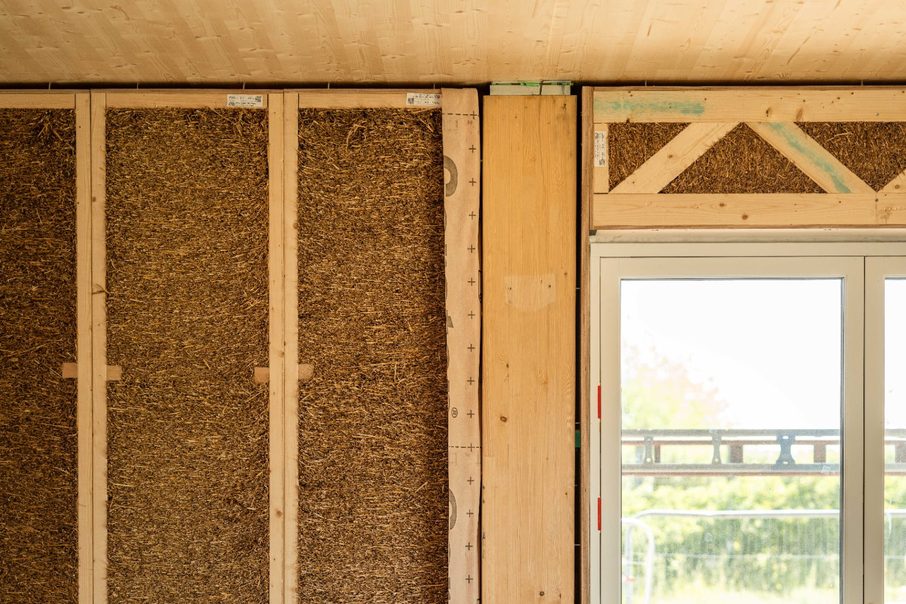
Hyllie. Image: Ecococon

Can the building itself store carbon?

Bio-based and regenerative materials

We assess building with bio-based, earth-based and low-carbon materials over the whole life cycle, including how much carbon a building stock can store, and what that asks of forests and supply chains.

  • Life cycle assessment of bio-based, earth-based and low-tech construction
  • Biogenic carbon accounting and storage potential, from building to global stock
  • Carbon uptake in buildings through mineral carbonation
  • Lead markets for low-carbon steel and cement

ProjectsAgora lead markets · CollaborativeCarbon

PublicationsCarbon storage and mitigation potential of structural wood and biochar-based… · Biogenic carbon dioxide storage and mineral carbonation uptake in EU buildings · Bio-based building material solutions for environmental benefits over…

Typically for: Material producers and industry, funders, public authorities

Do we need to build this at all?

Sufficiency, renovation and housing

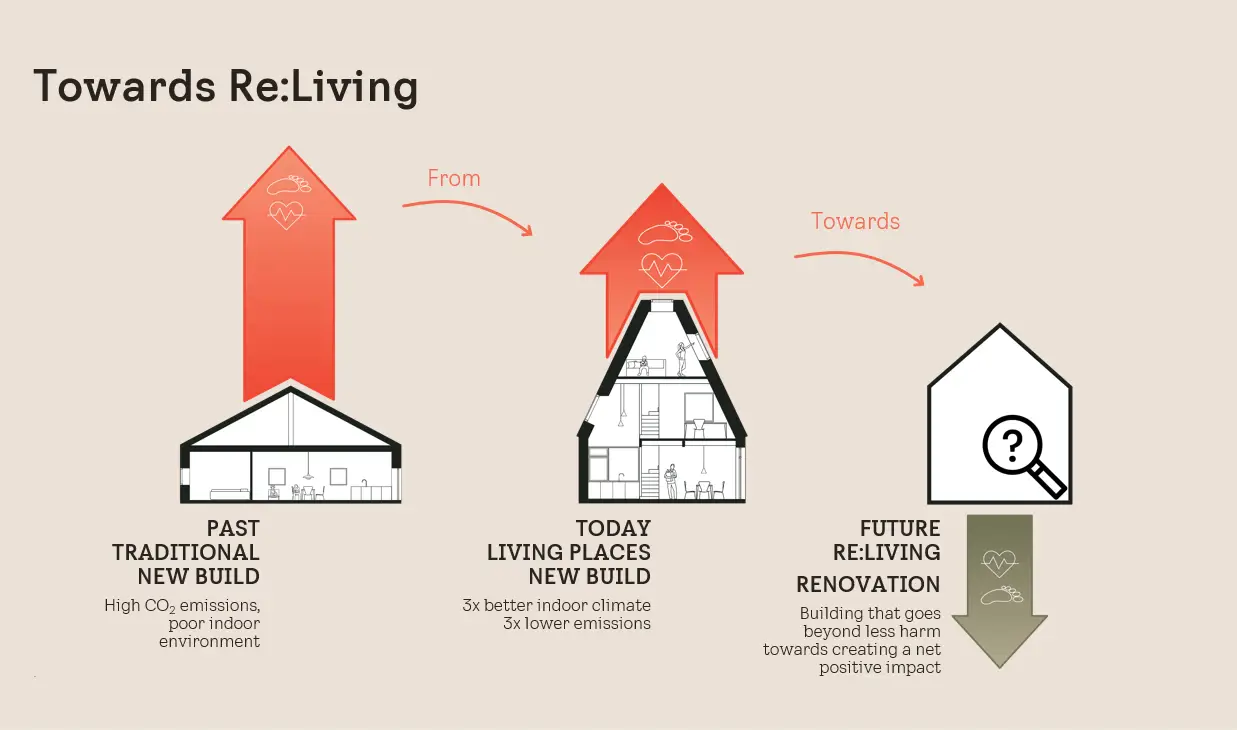
Using what exists before building new: renovating, extending and sharing space, and housing designed with the people who live in it. We quantify what that saves, from one home to Europe's building stock.

  • Impact hierarchies and savings potential for renovation and extension
  • Whole life carbon of collaborative and community-led housing
  • Sufficiency as a measurable strategy
  • Low-tech passive design

ProjectsRe:Living · CollaborativeCarbon

PublicationsThe housing we need for the future we want · Low-tech passive solar design concepts and bio-based material solutions for… · wohnlabor - gemeinsam wohnen gestalten

Typically for: Housing providers and cooperatives, cities, industry partners, foundations

Global South and emerging markets

Most of the floor area of the coming decades will be built in the Global South. Across all three strands, a growing share of our work is with partners in China, India, Chile and South Africa: shared data, local capacity, and methods built with local teams rather than imported.

Work with us

We would rather hear the problem than the brief. We cover the whole life cycle, from cost and carbon to environmental and, increasingly, social impacts, and every scale from a single building to national and global building stocks. Tell us the decision in front of you, and we will tell you what evidence would hold up.

Looking for training, a workshop or a speaker, or something else entirely? Write to office@riselabs.at.

Not sure where you fit? See the eight questions we answer →