

Avoid. Reduce. Regenerate.
-
Avoid: build only what is needed.
The emissions that never happen are the cheapest and the most certain. That means renovating before replacing, using vacant and under-used space, and planning for enough floor area rather than ever more.
Our work: Re:Living, a renovation-first hierarchy for European housing; sufficiency scenarios for EU building stocks.
-
Reduce: make what we build count.
Then cut what remains: lower-carbon materials, longer service lives, reuse, and efficient operation. We set benchmarks and limit values from real buildings, so reductions are measured, not assumed.
Our work: whole life carbon benchmarks and limit values; the EU whole life carbon roadmap.
-
Regenerate: give back more than we take.
Only then do we ask what the built environment can return: carbon stored for the long term, materials kept in use, ecosystems restored.
Our work: research on biogenic carbon storage in EU buildings.
The guardrail: regeneration comes last and never pays for what could have been avoided. If a gain in one place is bought with a loss somewhere else, in nature, affordability or material justice, we do not count it as a gain.
That framing decides what we work on. A method that nobody uses changes nothing. A regulation without credible data behind it gets watered down in consultation. An innovation that works beautifully on only one site stays limited in reach. Each of those is a different kind of challenge, and they need different kinds of intervention. We think about all three, and try to bring them all forward at once.
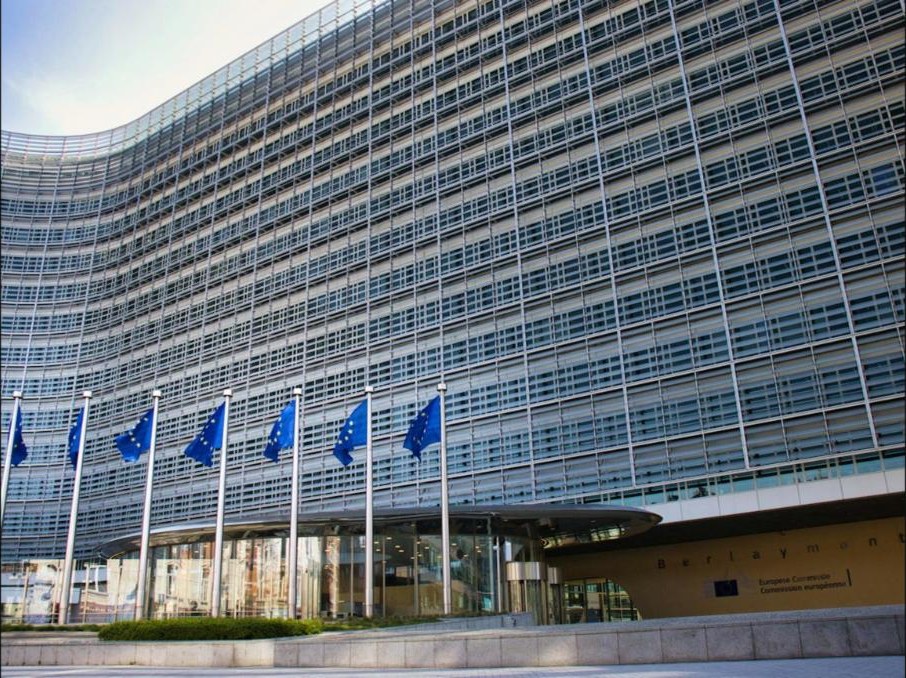
Scaling up: changing the rules
The science-to-policy interface: establishing the life cycle perspective in law and making it operational.
Our work here has moved from single-building assessment to transnational building stock modelling. We led the analysis behind the European Commission's roadmap for reducing whole life carbon of buildings, and quantified the baseline and future scenarios for emissions and removals across the EU building stock to 2050. That evidence feeds instruments with teeth - the revised EPBD, which will require whole life carbon disclosure for all new buildings by 2030, and the EU Taxonomy, which steers where capital goes.
The next step is widening the lens beyond greenhouse gases: a full environmental footprint, and the social and economic dimensions of a transition that has to be just as well as fast.

Scaling wide: reaching greater numbers
Methods only matter at the scale they are used. Much of our work is therefore building the shared infrastructure that lets many actors act at once.
INDICATE is a funding and support framework helping national consortia generate the building LCA data their governments need to set benchmarks - piloted in Ireland, Spain and Czechia, now running in Austria, Croatia, Hungary, Italy and Luxembourg under the EU LIFE programme. GBDI, developed with EPFL under the GLOBE consensus, is building an open global data commons on resource use and embodied carbon, with particular attention to the Global South, where most of the floor area of the coming decades will be built.
Both began as pilots and both outgrew them. Both now have lives of their own, which is the point.
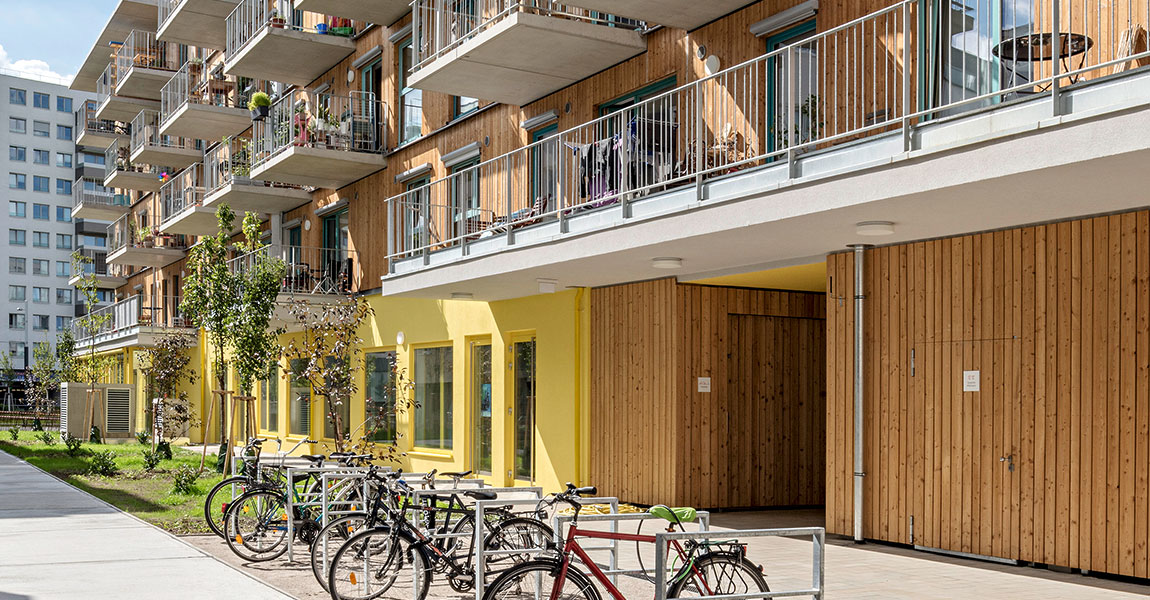
Scaling deep: working with pioneers
The third strand is the smallest in budget and the least comfortable in a policy meeting, and we think it is where the interesting questions live.
Here we work with the networks pioneering radical alternatives: bio-based and earth-based construction, low-tech passive design, community-led and collaborative housing, reuse of existing structures, and sufficiency strategies that reduce how much needs to be built in the first place. These rarely scale by replication. They matter because they test what is possible, and because they shift what the mainstream considers normal.
This is also where we guard against carbon tunnel vision. An intervention that cuts emissions while worsening affordability, biodiversity or material justice is not a success, it is a transfer.
Efficiency buys time. It does not, by itself, land us anywhere.
Growth, and what follows it
Most scenarios still assume that construction keeps growing and gets cleaner per square metre. Our own research suggests that will not be enough: in the EU, relying mostly on efficiency and cleaner materials would exceed national capacities by 2.7 billion tonnes CO2e over 2020-2050 (Alaux et al., 2026). Global floor area is projected to rise by up to 150% by 2050, roughly five billion square metres of new building every year (Global Status Report for Buildings and Construction 2025-2026, UNEP and GlobalABC). Efficiency gains that would be impressive against a stable stock look much less so against that.
We take the post-growth question seriously - not as a slogan, but as a research agenda. What would it mean to meet housing and infrastructure needs with radically less new material? Which existing buildings should never be replaced? What does sufficiency look like as a measurable strategy rather than a virtue?
We are not neutral about this, and we are also not naive about it. The instruments that exist today - benchmarks, disclosure duties, taxonomies - were built for a growth paradigm, and they are still the best available lever for cutting emissions this decade. So we help build them, well, while doing the research that asks what comes after.
Holding that tension is not a compromise between two positions. It is the position.
How we hold ourselves to account
- We publish our methods, data and code wherever licences allow.
- We state our assumptions. Allocation rules, system boundaries and uncertainty ranges come with every result.
- We build models to be repeated by national teams, not bought from us.
Methods
Our work combines life cycle sustainability assessment with building data science. In practice that means bottom-up building stock models, archetype-based characterisation, statistical analysis of environmental product declarations and building LCA case data, scenario modelling to 2050, and open-source tooling in Python.
We publish our methods, data and code openly wherever licensing allows. Get in touch to learn more.